
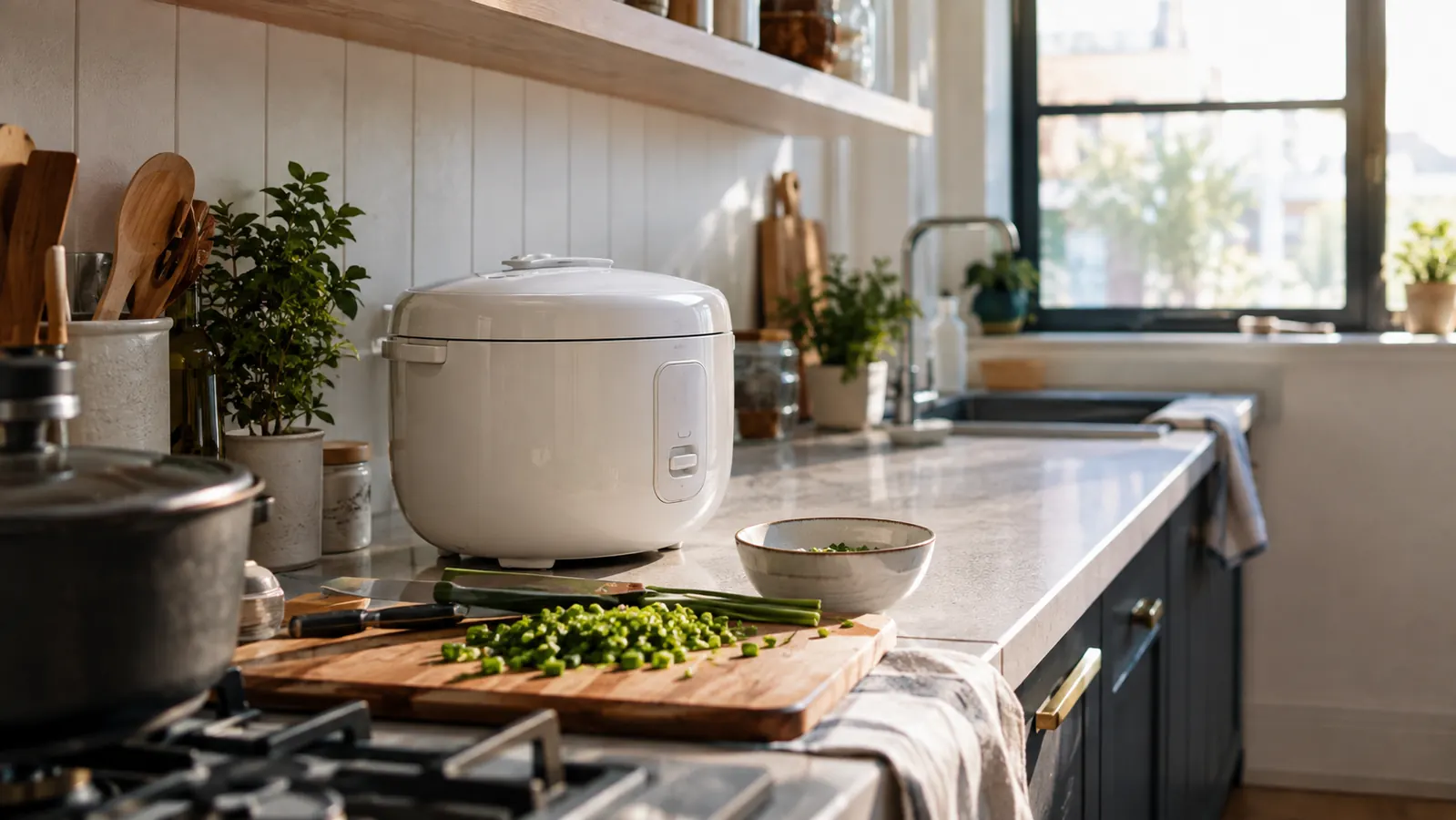
When I moved out of the family house and into a one-bedroom apartment in Columbus, I gave away most of my appliances. The big rice cooker and the stand mixer went to my daughter, and I promised myself that anything new would have to earn its spot on about four feet of counter. The Aroma 3-cup rice cooker was one of the first things I bought for the new kitchen, and it has been on that counter every single day since. This review is what I have learned from months of cooking rice, oatmeal, grains and simple one-pot suppers in it, for myself on weeknights and for my two grandkids on Sunday afternoons.
I spent thirty years managing a school cafeteria, so I have strong opinions about rice. I have cooked it in hotel pans for four hundred kids and in a saucepan for one. What I wanted from a small appliance was simple: rice I do not have to watch, a pot I can wash in a minute, and a machine small enough that it does not crowd the cutting board. The Aroma does all three, with a couple of honest limits I will get to below.
The Quick Verdict
The Aroma 3-cup rice cooker is the small appliance I would buy again first. It makes reliable rice and oatmeal with one switch, it cleans up in about a minute, and it fits under a low cabinet. It is not fast and it has no timer, but for one or two people it earns every inch it uses.
Amazon Check Today's Price →The little rice cooker that never left my counter
If you cook for one or two in a small kitchen and want rice, oatmeal and simple grains without babysitting a pot, the Aroma 3-cup is the one I trust.
Amazon Check Today's Price on Amazon →How I've Used It
Most weeknights the Aroma makes one cup of uncooked rice, which comes out to about two generous servings. I eat one with dinner and keep the other in the refrigerator for fried rice or a rice bowl the next day. On Sundays, when the grandkids come over, I fill it closer to the three-cup line and it makes enough cooked rice for the three of us plus leftovers. The inner pot is marked on the inside with lines for each cup, and the included measuring cup matches those lines, so I stopped guessing at water within the first week.
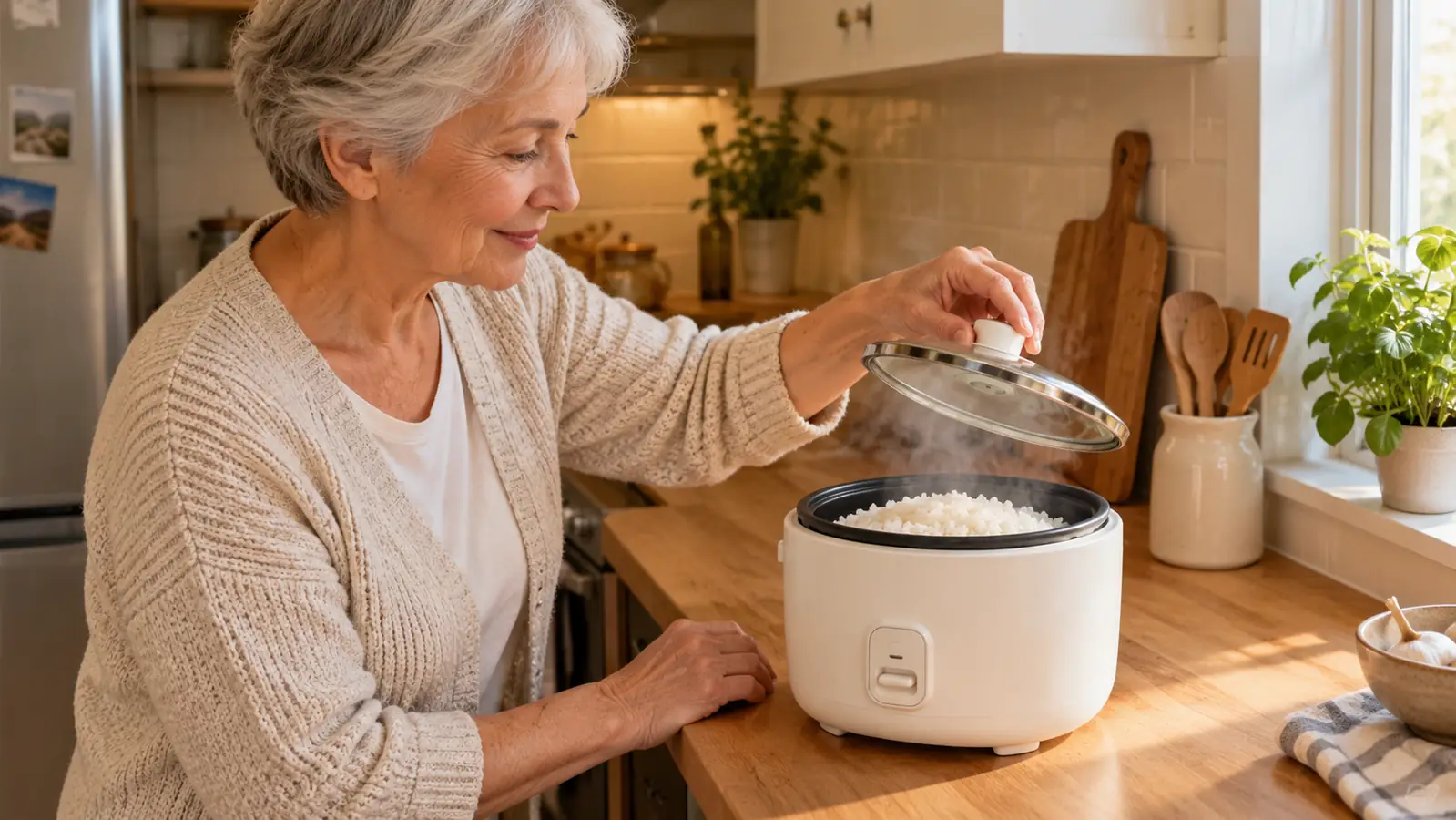
Using it is about as simple as an appliance gets. You rinse the rice, put it in the pot, add water to the matching line, set the glass lid on, and push the single lever down to cook. When the water is absorbed, the lever pops up on its own and the cooker switches to keep warm. There is no screen, no menu and nothing to program. For someone who spent years reading equipment manuals at work, that is a relief, not a drawback.
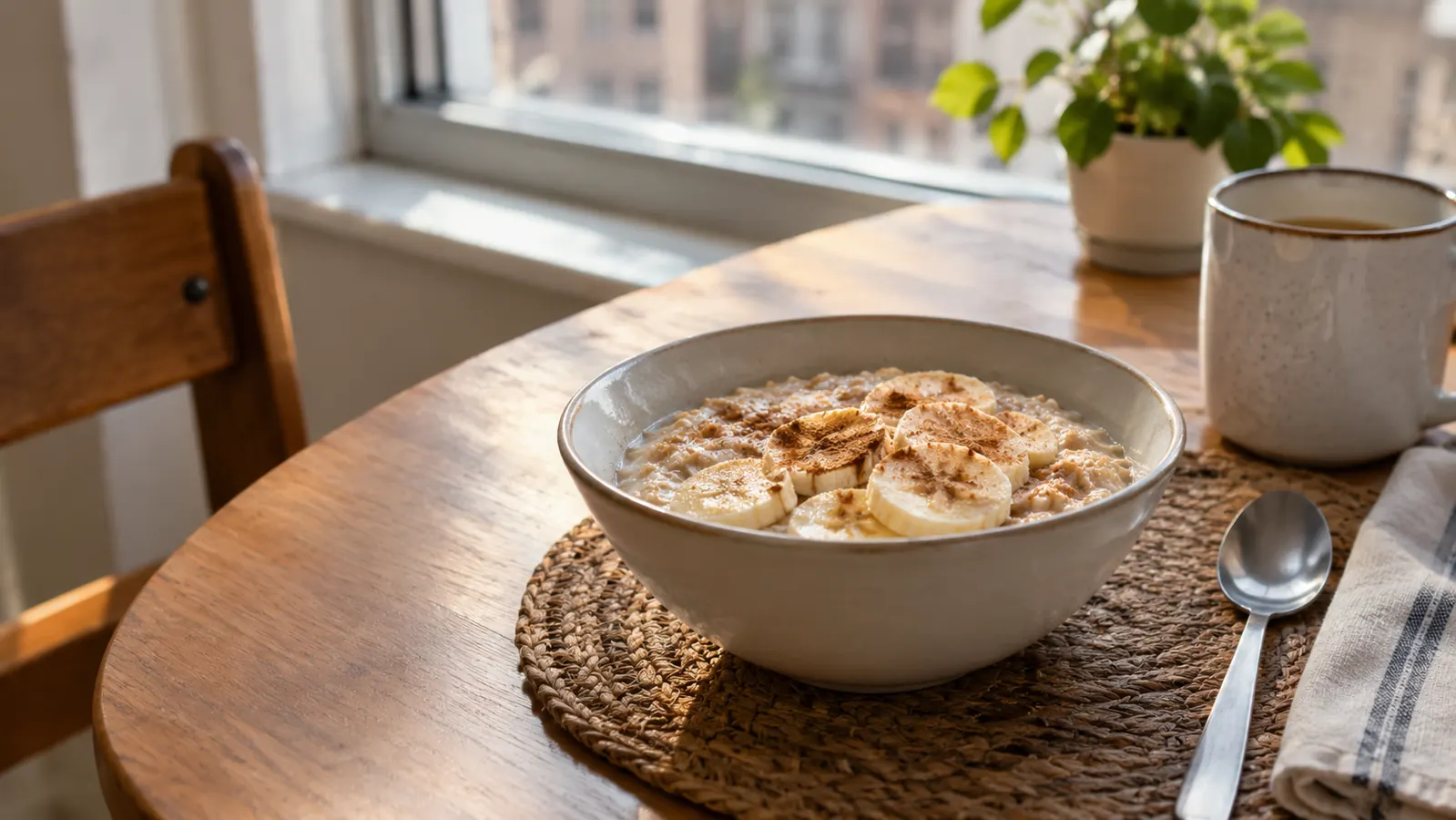
I also use the Aroma for things that are not rice. Steel-cut oats, quinoa, small batches of lentils, and a simple chicken and rice soup have all come out well. Oatmeal is the one I make most. I put in a half cup of oats, about a cup and a half of water or milk, a pinch of salt, and let it go. I learned the hard way to use a little less liquid than the package says and to keep the batch small, because oatmeal foams and a too-full pot will bubble up under the lid.
Sunday afternoons are the real test. Both of my grandkids would eat rice at every meal if I let them. I start the Aroma when they walk in the door, and by the time we have finished a board game the rice is done and holding on keep warm. The older one has learned to measure the rice and water himself using the lines in the pot, and I let him push the lever down. It is the only appliance in my kitchen I am comfortable letting a child run with me standing right there, because there is no open flame, no blade, and only one control to get wrong.
Leftover rice has become a planned part of my week rather than an accident. A cup of cooked rice from the Aroma, chilled overnight, makes the best fried rice I have ever cooked at home, because the grains are dry and separate instead of mushy. I also freeze single portions in small containers. On a night when I do not feel like cooking, a frozen portion warmed with a little water and a fried egg on top is a decent supper in five minutes.
Rice Quality After Months of Daily Cooking
The rice is consistent, and consistency is the whole job. Long-grain white rice comes out fluffy and separate, with a thin, lightly golden layer on the bottom if I leave it on keep warm for a long time. Jasmine is my favorite in it. Brown rice takes noticeably longer and benefits from a little extra water and a soak of twenty minutes or so before cooking, but it comes out tender rather than chalky, which is more than I could say for my old saucepan method.
I tested it a few times against a pot on the stove, cooking the same rice with the same rinse. The stove can be just as good when I watch it, but the stovetop gave me a scorched bottom twice in the first month because I got distracted by a phone call. The Aroma has never burned a pot on me. In a small apartment, where the smoke detector is about eight feet from the range, that alone was worth the counter space.
The keep-warm setting is gentle enough that rice is still pleasant an hour after it finishes. Past two hours it starts to dry out around the edges and the bottom layer gets firmer. I treat keep warm as a buffer for dinner timing, not as storage. If supper is running late, I am not worried. If I am done eating, I unplug it and put the leftovers away.
Sticky and short-grain rice work too, though they need a gentler hand. For a small batch of sushi rice for the grandkids, I rinse it well, use water just below the line, and let it rest on keep warm for ten minutes before I open the lid. Parboiled rice is the one variety that never came out quite right for me. It stayed a little firm even with extra water, so I cook that one on the stove instead.
Size, Counter Space and Storage
This is the part that matters most in a galley kitchen. The Aroma is about the size of a large coffee can. It sits comfortably under my upper cabinets with room for the steam to escape, and it takes up less counter than my cutting board. When I need the space for a big Sunday cooking project, I lift it by the handle and set it on top of the refrigerator. It is light enough that I do that with one hand.
The cord is a fixed cord, not a detachable one, which I mention because some people prefer to tuck the cord inside the pot for storage. It is long enough to reach my outlet strip from the corner without stretching across the stove. I keep it plugged straight into the wall rather than into a power strip, which is how I run every appliance that heats.
The glass lid is my one storage complaint. It does not lock to the base, so if you put the cooker away in a cabinet you have to set the lid on carefully or store it upside down inside the pot. It is a small thing, but in a crowded cabinet the lid has slid off once and rattled me half to death. I keep the cooker on the counter now, so the issue has gone away.
Cleaning and Day-to-Day Care
Cleanup takes about a minute, which is why it gets used. The nonstick inner pot lifts out, and rice releases from it with a soft sponge and warm soapy water. I fill it with hot water while I eat dinner, and by the time I am done there is nothing stuck to it at all. The glass lid goes in the sink with the dishes. I wipe the base with a damp cloth once a week and dry the little channel around the rim where condensation collects.
After months of daily use, the nonstick coating on my pot is still smooth with no peeling. I have been careful about it. I only use the plastic paddle that came in the box or a silicone spoon, and I never use a scrubbing pad on the inside. If you are the kind of cook who scrapes a pot with a metal spoon, this pot will not last as long as it should. Treat the coating gently and it holds up well.
The steam vent in the lid is small and can spit a little starchy water if the pot is overfilled. I learned to stay under the three-cup line for rice and well under it for oatmeal, and to leave a paper towel under the cooker on oatmeal mornings. Rinsing the rice until the water runs mostly clear also cuts down the foam a great deal.
The Honest Limits
It is not fast. A cup of white rice takes roughly twenty to twenty-five minutes from the time I push the lever down, and brown rice takes longer. If you are used to a pressure cooker, that will feel slow. For me it does not matter, because the rice cooks while I make the rest of supper, but if you want rice in ten minutes this is not the machine.
It also has no delay timer and no settings for different grains. You cannot set it in the morning to have rice ready at six. You get one switch and keep warm. For brown rice or oatmeal you adjust the water and the amount yourself rather than pressing a button for it. I like the simplicity, but someone who wants a menu of programs should look at a larger, fancier cooker and accept that it will take more counter.
Finally, three cups uncooked is the practical ceiling. It is perfect for one or two people and fine for a small family meal, but it is not a party appliance. When I made rice for nine people at a family birthday, I ran it twice. That is a fair trade for how little room it takes the rest of the year.
What I Liked
- Reliable, fluffy rice with one simple switch
- Automatic keep warm so dinner timing is forgiving
- Small enough to fit under low cabinets and lift with one hand
- Nonstick pot cleans in about a minute
- Handles oatmeal, quinoa and small soups well
- Measuring cup and paddle included, with clear fill lines
Where It Falls Short
- Slower than a pressure cooker
- No delay timer or grain settings
- Lid does not lock, so storing it in a cabinet is awkward
- Oatmeal can bubble out if the pot is too full
In months of daily use, the Aroma has never burned a pot on me, and in a small apartment with the smoke detector eight feet away, that alone earns its counter space.
Who It Is Right For
If you live alone or with one other person, cook in a small kitchen, and eat rice or hot cereal a few times a week, the Aroma 3-cup is an easy recommendation. It is also a good fit for a dorm room, an office kitchenette, an RV or a downsized home where every appliance has to justify itself. If you are comparing it against other compact cookers, I wrote up how it stacked up in my Aroma versus Dash mini rice cooker comparison, and the bigger case for owning one at all is in ten reasons a small rice cooker earns its counter space.
If you regularly cook for four or more, or you want programmed settings and a timer, buy something larger and plan to give it more room. The Aroma does not pretend to be that machine, and I think that is exactly why it works so well in a small one.
My Bottom Line
Some appliances you love for a month and then quietly move to the closet. The Aroma 3-cup rice cooker is the opposite. It is plain, it is a little slow, and it does one thing very well every single night. When I think about what I would keep if I had to clear the counter tomorrow, the Aroma is the first thing I would leave out. If you want to hear how it fit into the whole move into this apartment, that story is in my downsizing story.
Ready for rice you never have to watch?
The Aroma 3-cup rice cooker is small, simple and dependable, and it has earned a permanent spot on my four feet of counter.
Amazon Check Today's Price on Amazon →