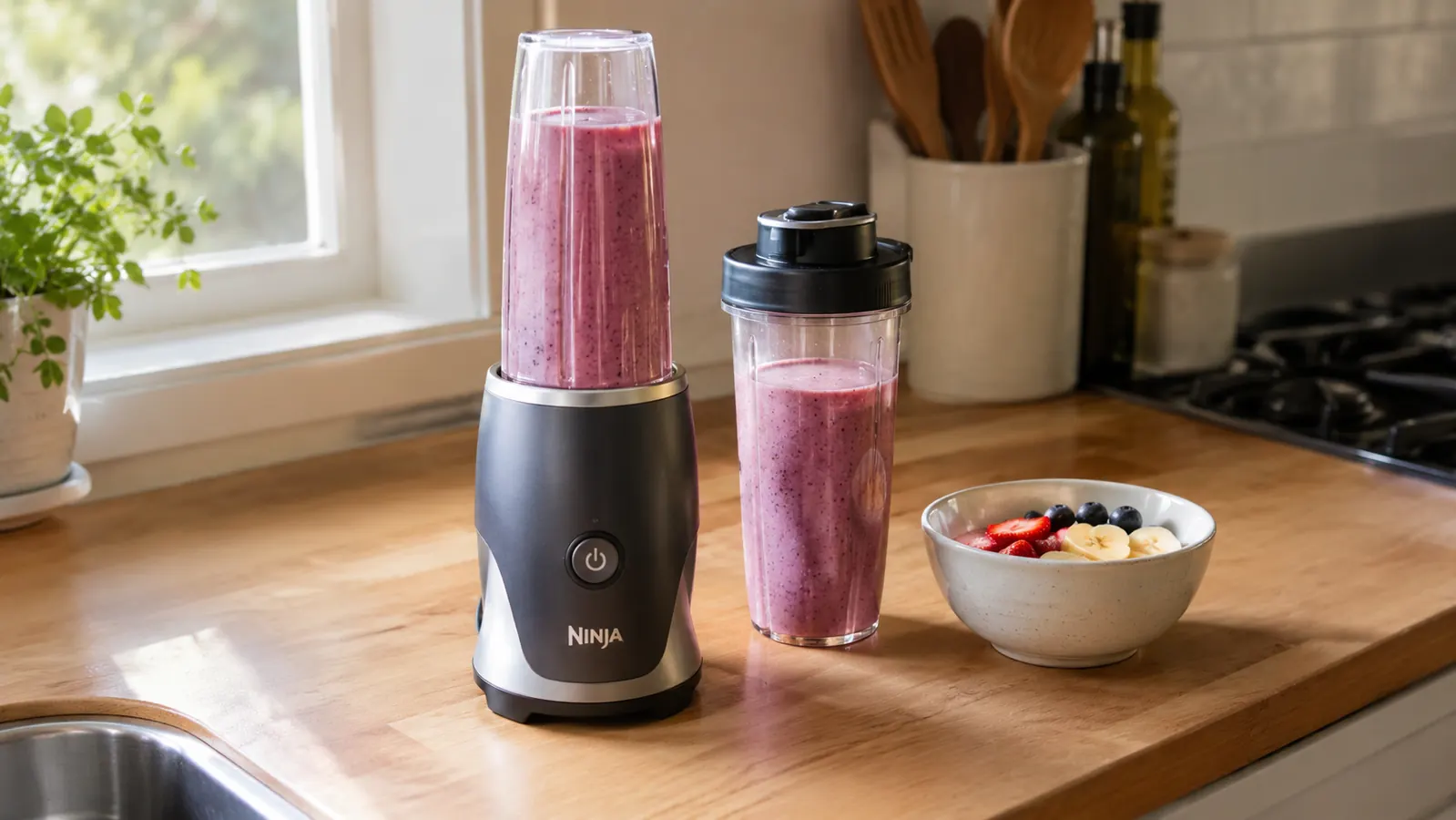
When I downsized from a family house to a one-bedroom apartment three years ago, I gave away most of my appliances. The ones that stayed had to earn their spot on four feet of counter, or they went in the closet. So when people started asking me which personal blender fits a small kitchen, the Magic Bullet or the NutriBullet, I did not answer from memory. I ran both through a month of real cooking in my galley kitchen, and I kept notes.
Here is the short answer. If your kitchen is genuinely small, the Magic Bullet fits better. It is shorter, quieter, and it rinses clean in seconds, which means it actually gets used. The NutriBullet is the stronger blender. It handles frozen fruit and thick smoothies with less fuss, but it takes up more room, makes more noise, and for one person making small batches, most of that power sits unused. Below is the honest breakdown, including where the NutriBullet wins, because it does win in real ways.
The Two Machines Side by Side
| Magic Bullet Personal Blender | NutriBullet Personal Blender | |
|---|---|---|
| Motor power | 250 watts, plenty for soft fruit, shakes and sauces | 600 watts, chews through frozen fruit faster |
| Counter footprint | Short, squat base that fits under an upper cabinet | Tall, narrow unit that needs headroom and a clear corner |
| Cups in the box | 22 oz cup that covers most single servings | 18 oz and 24 oz cups for two different serving sizes |
| Frozen fruit and ice | Works, but expects stops, shakes and extra liquid | Handles frozen fruit and ice with fewer interruptions |
| Cleanup | Unscrew the blade, rinse the cup, done | Same quick rinse, just a taller cup |
| Noise | Noticeably quieter in a small apartment | More power, more racket |
| Storage | Short enough to live on the counter full time | Tall, so it needs a cabinet or a clear spot |
| Best for | Single smoothies, dressings, sauces, small batches | Thick smoothies, frozen-heavy recipes, bigger portions |
How I Tested Both in My Galley Kitchen
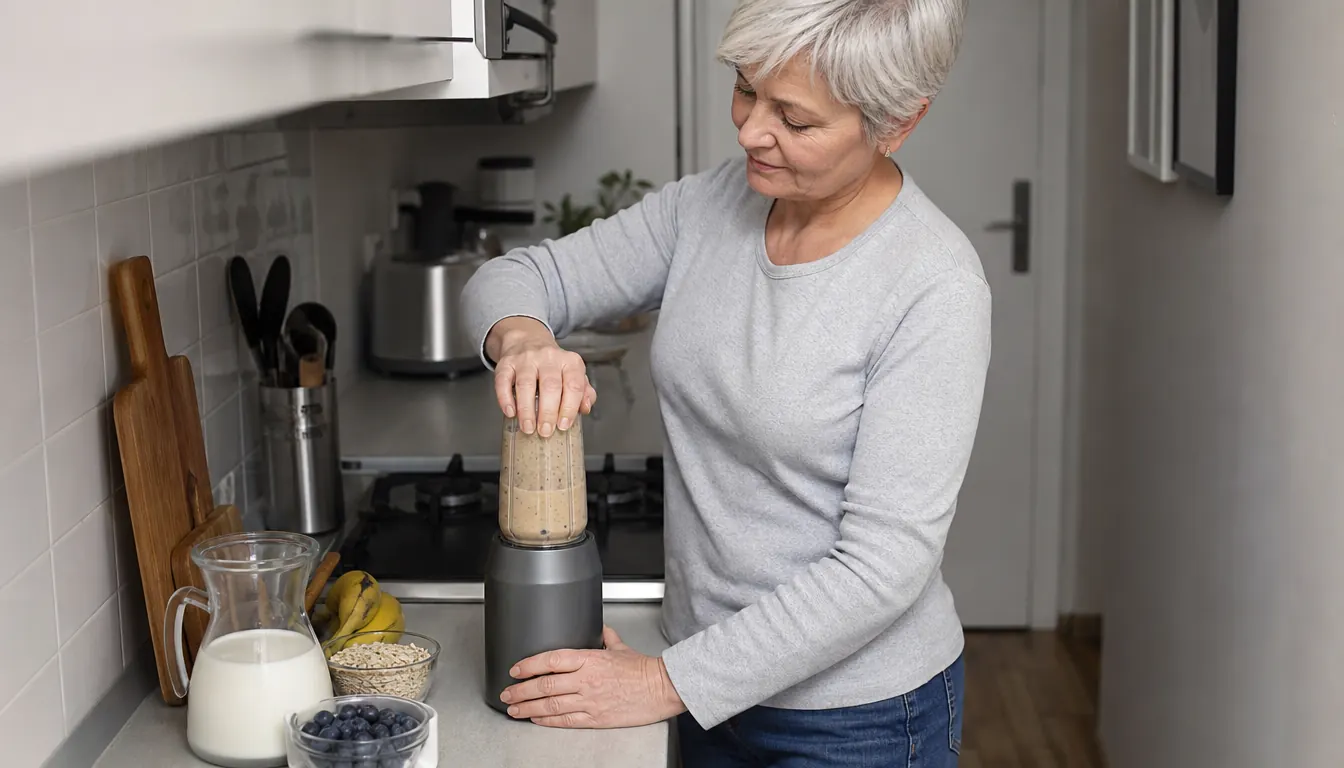
My kitchen is a true galley. I have about four feet of usable counter, one outlet strip, a small two-door pantry cabinet, and a full-size oven I rarely turn on in the summer. Every appliance has to earn its place, and my test is simple. Does it stay on the counter, or does it end up in the closet? I used each blender for two weeks straight, making my usual weekday smoothie, salad dressings, applesauce for my grandkids on Sunday afternoons, and the occasional soup puree.
I kept three questions in mind the whole time. First, how much counter space does the machine actually claim? Second, how long does cleanup take, because I will not keep an appliance that is a chore to wash. Third, do I reach for it after the novelty wears off? That third question is the one that matters most in a small kitchen, and it is the one most reviews never mention.
Where the Magic Bullet Wins
In my kitchen, the Magic Bullet wins before it is even switched on. The base is short and squat, so it lives on the counter directly under the upper cabinet. I reach for it every morning because it is already out. The NutriBullet is a tall, narrow unit, and it needs headroom. On my counter it blocked the cabinet door, and after a week I started storing it in the pantry. An appliance that lives in a cabinet gets used half as often, and in a small kitchen, use is the whole test.
The Magic Bullet is also the quieter machine. At 250 watts it is not a powerhouse, but for a single smoothie, a salad dressing, or a quick puree, it gets the job done without sounding like a blender in an echo chamber. In an apartment, that matters more than people think. I blend in the morning while my neighbor is still sleeping, and I do not feel rude doing it. Quiet is not a spec sheet feature, but it is the reason this blender stays out while the louder one goes in the pantry.
Where the NutriBullet Wins
I am not going to pretend the NutriBullet does not blend circles around the Magic Bullet, because it does. The 600 watt motor chews through a cup of frozen berries and ice without the stop, shake, and add more liquid routine the Magic Bullet needs. If your breakfast is a thick green smoothie with frozen mango and a raw carrot, the NutriBullet makes it in one pass. The Magic Bullet will get there eventually, but you will work for it.
The NutriBullet also gives you two cup sizes in the box, an 18 ounce cup and a 24 ounce cup, both with lids that travel well. That matters if you sometimes want a small shake and sometimes a full breakfast portion. The Magic Bullet's 22 ounce cup is fine for most of what I make, but it is one size, and for a bigger smoothie you are blending right up to the rim. For someone who makes one large smoothie most mornings and wants it done fast, the NutriBullet is the better machine. The only real question is whether it earns the counter space it demands.
The stronger blender is not always the right blender. In a small kitchen, the right blender is the one that stays on the counter.
What Daily Use Actually Looks Like
Most mornings I make the same thing. A handful of berries, half a banana, a scoop of yogurt, and enough milk to cover it all. In the Magic Bullet I screw the blade onto the cup, flip it onto the base, and press down. Twenty seconds later I unscrew the blade, screw on the regular lid, and drink from the same cup. That is the whole point of a personal blender. There is exactly one thing to wash, and it is the thing you drank from.
With the NutriBullet the routine is the same, and the drink is smoother, especially if the berries were frozen. But the cup is taller, the base is taller, and in my kitchen that means the whole unit does not fit under the cabinet. I have to pick it up, move it to the clear stretch of counter near the sink, blend, and move it back. That sounds like nothing, but it is exactly the kind of friction that sends an appliance to the closet by week three.
Salad dressing is where the Magic Bullet really earns its keep in my kitchen. I make a small jar of vinaigrette once a week: oil, vinegar, mustard, a clove of garlic, and a pinch of salt, blended for ten seconds. It comes out emulsified, which is something I could never get whisking by hand. With the NutriBullet it would come out just as good, but the Magic Bullet does it without pulling out a taller machine for a job that takes ten seconds.
On Sunday afternoons my two grandkids come over, and I make applesauce while they set the table. I peel and core three apples, drop them in the Magic Bullet cup with a pinch of cinnamon, and blend until chunky. It makes just enough for two small bowls, and the cleanup is one cup and one blade. With the NutriBullet I would get the same applesauce with a smoother texture, but I would also be reaching for a taller cup and a taller base in a kitchen that has no room for either.
What the Spec Sheets Do Not Tell You
Spec sheets will tell you watts and ounces. They will not tell you that the louder machine feels twice as loud in an apartment with thin walls, or that a tall blender blocks the cabinet door you need for your coffee mugs. They also will not tell you that both machines make single servings, and neither one replaces a full-size blender. If you are expecting to puree a pot of soup or crush a tray of ice for a party, you will be disappointed by either choice. Set your expectations to single serving and you will be happy with both.
The other thing the spec sheets do not tell you is the stop and shake reality of a lower wattage motor. The Magic Bullet will blend a frozen strawberry, but it wants you to shake the cup or add liquid partway through. That is not a flaw so much as a tradeoff. You trade a little convenience for a smaller, quieter machine that fits your kitchen. For me the trade is worth it. For someone who wants to push a button and walk away, the NutriBullet is the honest answer.
And one more thing. A personal blender is not a juice extractor. Neither of these machines separates pulp from juice, and neither one is going to turn a pile of wheatgrass into a glass of green liquid. If that is what you are after, you are shopping in the wrong aisle. What these two do well is make a smooth breakfast drink, a quick sauce, or a single serving of something you would otherwise buy in a bottle.
The Cleaning Test
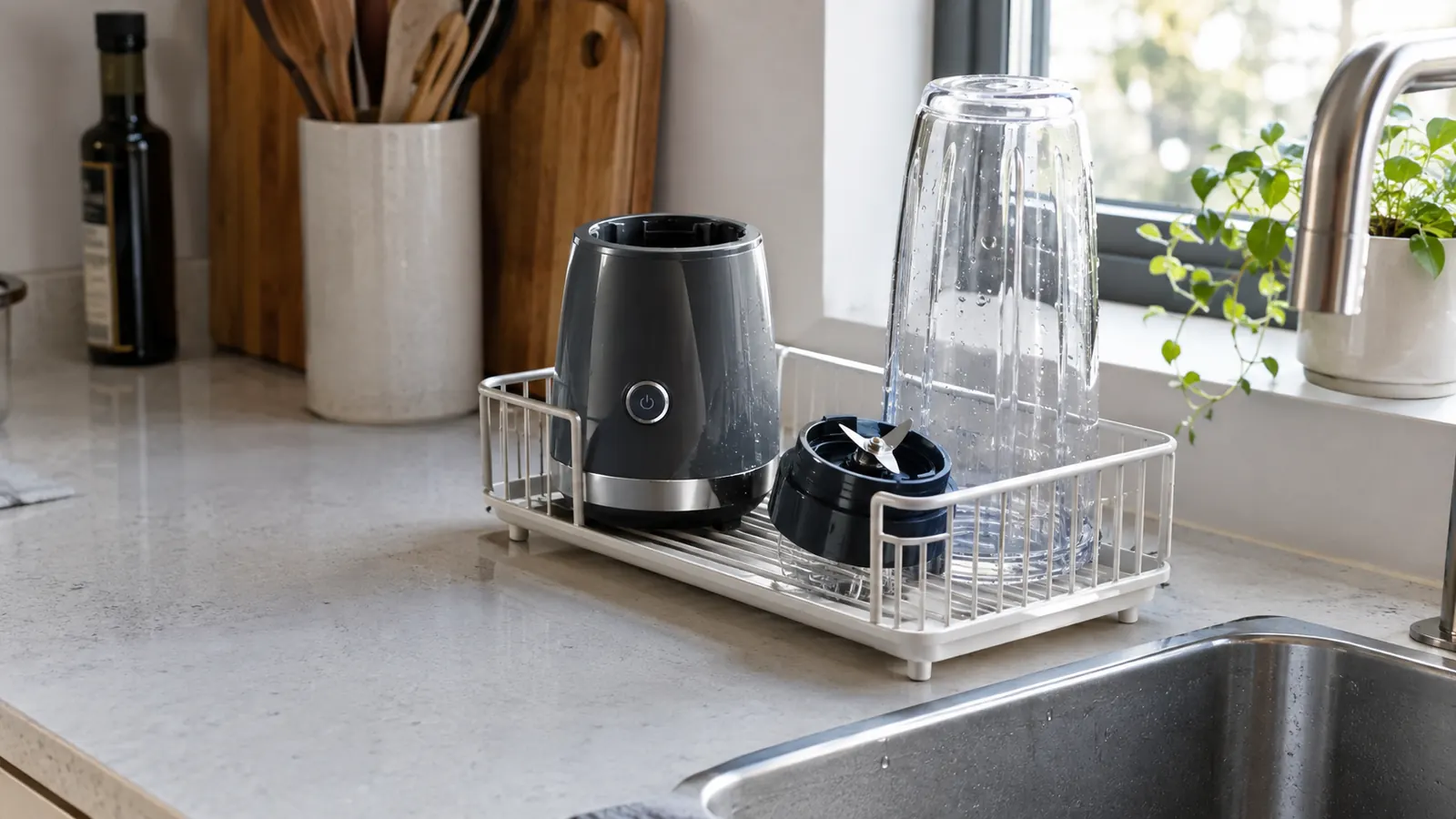
I timed the cleanup on both machines, and honestly, they tie. Both use the same design: the blade screws onto the cup, so you blend, unscrew, and rinse the cup and the blade under the tap. No pitcher to haul to the sink, no lid with a rubber gasket to scrub. The Magic Bullet cup is shorter, so it is a little easier to get a sponge into. The NutriBullet cup is taller, so I reached for the brush more often. Neither one ever went in the dishwasher in my house, because both rinse clean in about thirty seconds.
That speed matters more than it sounds like. In a small kitchen, the sink is usually full, the drainboard is small, and an appliance that demands a soak is an appliance you stop using. Both of these blenders skip the soak. If cleaning is your main worry, you can pick either one and be fine. The difference between them is space and power, not cleanup.
For a galley kitchen, the Magic Bullet earns its counter space.
After a month of side by side use, the Magic Bullet is the blender that stays out and gets used daily. It handles what one person actually blends, rinses clean in one pass, and does not shout about it. If you are choosing for a small kitchen, this is the fit.
Amazon Check Today's Price on Amazon →Who Should Buy Which
Buy the Magic Bullet if your kitchen is genuinely small, if you mostly blend for one, and if you want an appliance that lives on the counter and gets used. That is me. I cook for myself most nights, I make a morning smoothie, and I would rather have a quiet machine that sits under the cabinet than a powerful one that lives in the pantry. If you want the longer picture, the long-term Magic Bullet review on this site follows the same model for months, and the listicle on why a personal blender suits a galley kitchen lays out the space argument in detail.
Buy the NutriBullet if your smoothies are thick and frozen heavy, if you regularly blend for two, and if you have a clear stretch of counter or a tall cabinet where it can live. It is the better blender, full stop. For a household that blends for two every morning, it earns its spot. In my galley kitchen it would not. That is not a knock on the machine. It is a statement about space.
One more honest note. If you already own a Magic Bullet and you are tempted by the NutriBullet because your smoothies are getting thicker, try adding a little more liquid or cutting frozen fruit into smaller pieces first. You might not need a new blender at all. But if you are choosing between the two today, decide on space first and power second. The stronger machine only helps if it is within arm's reach. The small space story on this site makes that same case from a different angle.
And if neither one feels right? Be honest about what you actually make. If you only blend once a week, a simple immersion blender might serve you better and take up less space. If you host and cook big meals, a full-size blender is worth the cabinet. The point is to match the machine to the counter, not the other way around.
Still torn? Let the counter decide.
Measure your counter before you compare watts. In a galley kitchen, the Magic Bullet is the one that stays out, stays quiet, and keeps blending past the first month. It is the choice I made, and I have not regretted it once.
Amazon Check Today's Price on Amazon →