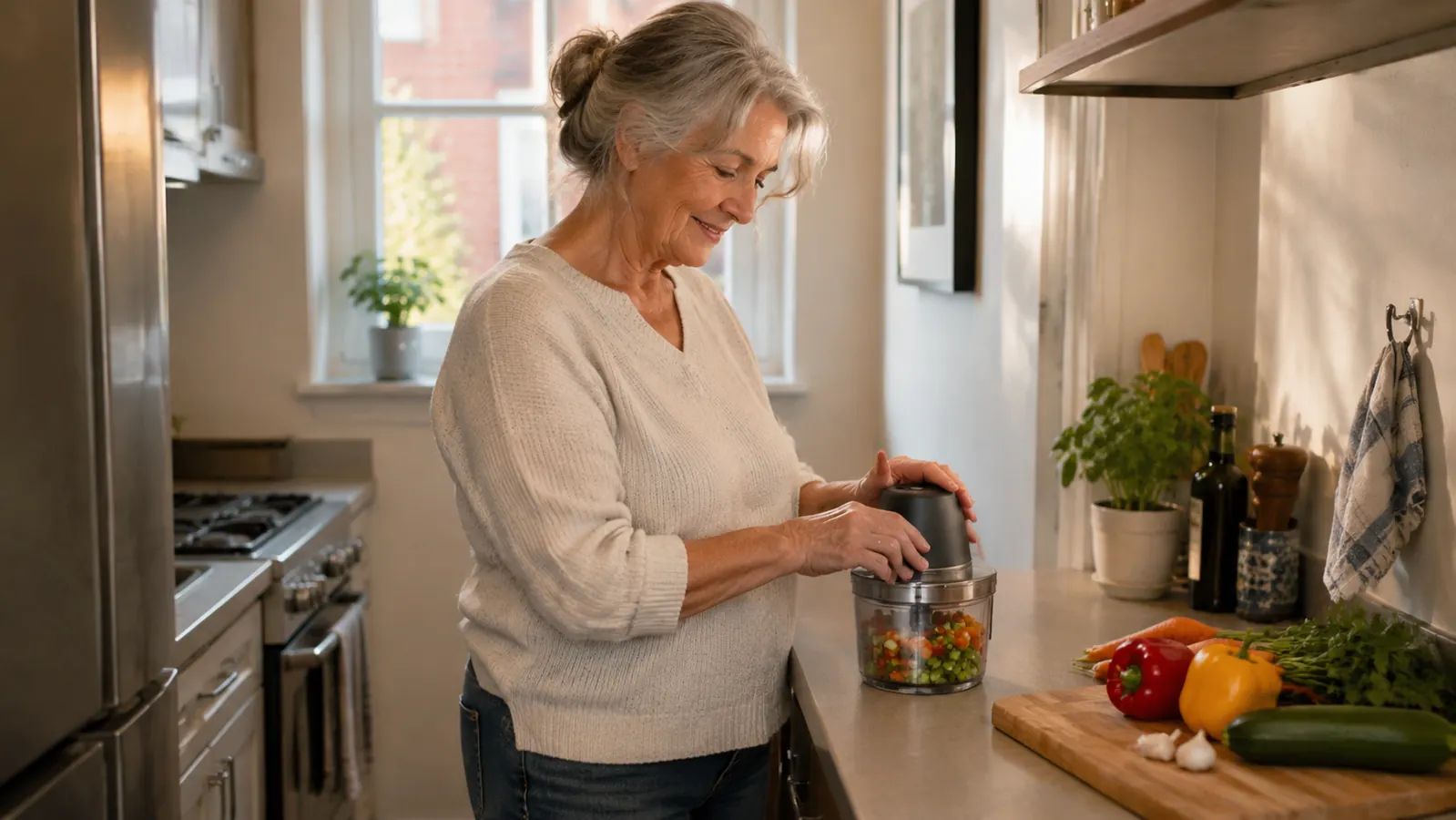
I spent thirty years running a school cafeteria, so I know what it means to prep vegetables fast. On a busy morning, we could go through a case of onions before the first bell, and I could dice one blindfolded. But when I retired and downsized to a one-bedroom apartment in Columbus three years ago, I had to relearn how to cook for one in a galley kitchen with about four feet of usable counter. Most of my big appliances went to my daughter or to charity, and every small appliance had to prove it deserved a spot. The Hamilton Beach 3 Cup Electric Vegetable Chopper and Mini Food Processor earned its place in about a week, and it is still sitting on the counter today.
The reason this chopper works so well in a small kitchen is not just its size. It is the way it changes the order of dinner. I can dice an onion in about fifteen seconds, chop a bell pepper in another ten, and mince a handful of garlic before the pan is hot. This article walks through the exact routine I use, start to finish, including the mistakes that turn chopped vegetables into mush and how to avoid them. If you have a tiny kitchen and a real dislike of crying over onions, this method is for you.
Start With the Chopper That Earns Its Counter Space
The Hamilton Beach 3 Cup Electric Vegetable Chopper and Mini Food Processor handles onions, peppers, carrots, and herbs in seconds, and it cleans up in under a minute. It is the tool I reach for every night in my galley kitchen.
Amazon Check Today's Price on Amazon →Before we get to the steps, one honest note. A mini chopper will not replace every knife job in your kitchen, and it is not the right tool for shredding a head of cabbage or pureeing a big pot of soup. What it does, and does better than any full-size machine I have owned, is the daily vegetable prep that makes up most of a weeknight dinner. Here is the order I do things in.
Step 1: Set Up a Landing Pad You Can Reach Without a Hunt
I keep my mini food processor in the corner of the counter, right next to the outlet strip, because the most important thing about a small kitchen appliance is that it has to be easy to get to. In my old house, I had cabinets to spare and things disappeared into them for years. Here, if something lives in the pantry cabinet, it does not get used. The Hamilton Beach chopper is light enough that I can move it to the windowsill when I need the counter space and back again without a fuss.
Clear about a foot of counter in front of you. Put a cutting board on one side and a bowl or a plate on the other. Wash and dry the vegetables before you start, and set them where you can reach them. The whole job goes faster when you are not hunting for a clean bowl in the middle of a step, and in a small kitchen, every extra trip to the sink costs time.
One detail that matters more than you would think: the cord. The chopper has a short cord, which is actually a blessing in an apartment with one outlet strip. I plug it in, use it, and unplug it right away. Leaving it plugged in is how cords get tangled with the toaster and the kettle on a crowded counter, and untangling a mess of cords is not how I want to spend my evening.
Step 2: Learn the Order That Keeps the Bowl From Overfilling
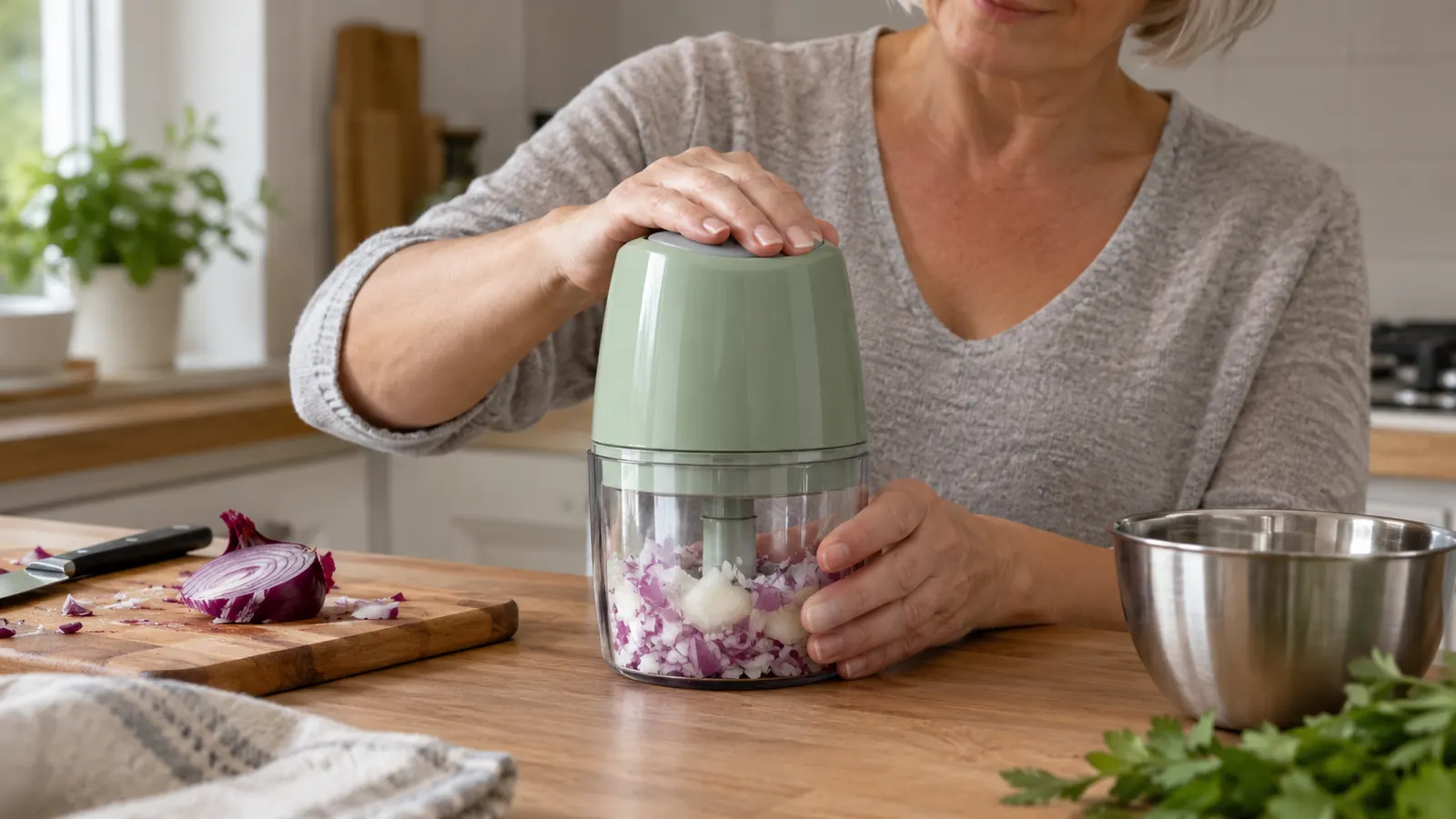
The chopper has a three-cup bowl, which sounds small until you realize that three cups of chopped vegetables is about four servings of soup or a generous stir fry. For one person, and even for Sunday dinner with my two grandkids, that is the right size. The mistake is trying to stuff it full. A bowl packed to the brim does not chop. It smashes the bottom layer and leaves the top layer untouched.
So work in batches, and work in a sensible order. Hard vegetables first: carrots, celery, potatoes. Then the medium ones: onions, bell peppers, zucchini. Soft things last: mushrooms, tomatoes, herbs. The reason is simple. Hard vegetables need more pulses, and they leave the bowl in better shape for what comes next. If you chop soft herbs right after a batch of carrots, you will be picking carrot flecks out of your parsley.
For a weeknight, I usually run two batches. One for the base, celery, carrot, and onion, and one for whatever green thing is going into the pan. Two batches takes about ninety seconds total, and that is still faster than chopping everything by hand. If I am making soup for the freezer, I run three or four batches in a row and dump each one straight into the pot.
A practical example: when I make vegetable soup on Sunday, I chop the onion, carrot, and celery in one batch, pulse them six or seven times until they are a rough dice, and tip them straight into the pot with a little oil. Then I run the mushrooms and zucchini the same way while the base simmers. Total knife time for the whole soup is zero, and the only thing to wash is the chopper bowl.
Step 3: Pulse, Don't Hold, and Look Before You Press Again
This is the single most important technique, and it is the one most people get wrong. Do not press the button and hold it. The Hamilton Beach chopper is fast, and three seconds of continuous running turns an onion into something closer to onion juice. Instead, press for two seconds, release, shake the bowl, and look. Then decide whether it needs another pulse.
How do you know when it is done? Stop when the biggest piece is the size you want and before the smallest pieces turn to mush. For soup, I leave it chunkier. For meatloaf, I want it finer. For salsa, I want it just barely chopped, almost a dice. That control is the whole argument for a chopper over a blender, and the pulse method is what gives it to you.
The shake between pulses is the trick I brought home from the cafeteria. Food settles at the bottom of the bowl, and the top layer spins around without ever touching the blade. One shake, one pulse, check again. You will be surprised how even the chop turns out once you get into the rhythm. It took me about a week of nightly use to stop over-processing, and now I can hit the right texture almost every time.
A good test for texture came the week I started using the chopper. I made my grandmother's meatball recipe, which calls for finely minced onion and garlic. One batch in the chopper, pulsed six or seven times, gave me exactly the fine mince the recipe wants, with no tears and no slipping fingers on a wet onion. That was the night I stopped reaching for the knife.
Step 4: Prep Once and Eat All Week
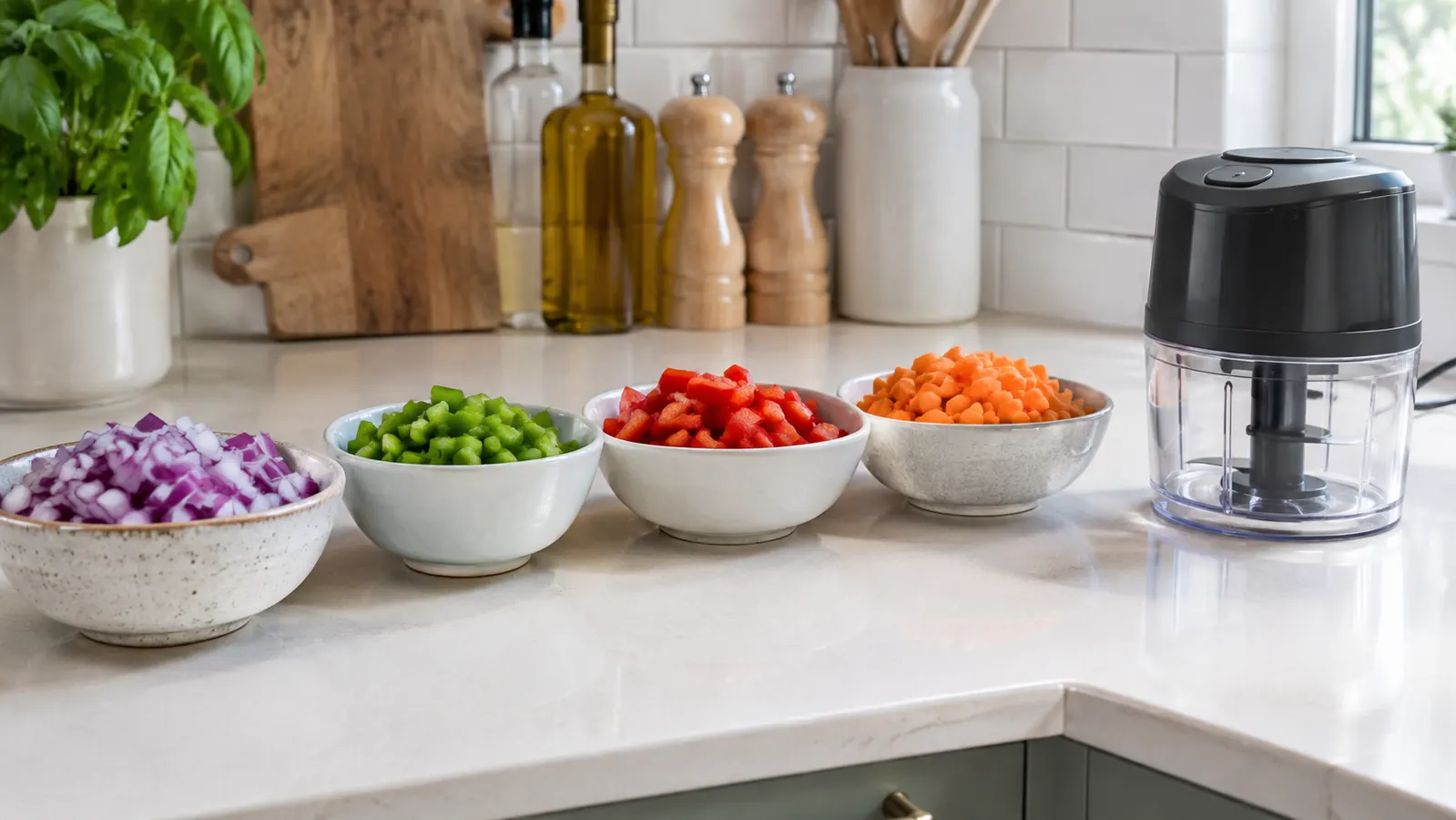
The real payoff of a mini chopper is not the fifteen seconds it saves on one onion. It is the way it makes batch prep possible in a kitchen with no room. On Sunday afternoon, while my grandkids watch cartoons, I set up the chopper and work through the week's vegetables. Onions, peppers, carrots, celery, zucchini, mushrooms. Each one takes under a minute, and the whole pile is done before the cartoon ends.
I pack the chopped vegetables into small containers and put them in the fridge. On a Tuesday night, dinner is a pan of vegetables and a protein, and the prep is already finished. The Hamilton Beach chopper makes this routine possible because it is small enough to leave on the counter and easy enough to clean that I do not dread the cleanup after six batches. A full-size food processor would do the same job, but it would live in the closet, and I would never drag it out on a Tuesday.
One note on storage, learned the hard way: chopped vegetables keep better when you do not pack them tight. A loose container with a paper towel on top lasts most of the week in my fridge. Onions and peppers are the best keepers. Mushrooms are better chopped the day you use them, so I leave those until the night I need them. Carrots and celery hold up fine for three or four days.
Step 5: Clean It the Way It Was Designed to Be Cleaned
The reason I reach for the Hamilton Beach chopper instead of the full-size processor is not the chopping. It is the cleanup. The bowl, the lid, and the blade come apart into three pieces, and I rinse them under hot water the moment I am done, before anything dries on. That is a thirty-second job, and it is the whole reason the appliance earns its corner of my counter.
The blade is the one piece to be careful with. It is genuinely sharp, which is good for chopping and bad for careless fingers. I wash it by hand with the handle pointed away from me, and I dry it right away. The bowl and lid can go in the dishwasher, but in my apartment I usually wash them by hand because there are only two pieces and it takes less time than loading the dishwasher.
Do not let the motor base get wet. It just needs a wipe with a damp cloth, and I keep one near the outlet strip for exactly that. Sixty seconds from dirty to clean, and the chopper is back in its corner, ready for the next night. That quick turnaround is what keeps it from becoming another appliance that sits in a cabinet, and it is why mine has stayed on the counter for seven months.
The Sunday routine with my grandkids is the real proof. They help me wash the vegetables, I run the chopper, and they put the containers in the fridge. They think it is a game. What they do not know is that they are learning the same prep habits I used in the cafeteria, and the whole cleanup is done before the lunch dishes hit the sink.
What Else Helps
A few small tools make the routine even smoother. First, a cheap bench scraper. It costs almost nothing, and it is the fastest way to sweep chopped vegetables off the cutting board and into the bowl of the chopper. Second, a second bowl. I keep one small bowl for the chopped food and one for scraps, and that simple habit keeps the tiny counter from turning into a disaster zone.
Third, prep vegetables when they are dry. Wet vegetables spin against the sides of the bowl and chop unevenly. I pat mushrooms and peppers dry with a towel before they go in. Fourth, and this is the tip I wish someone had given me years ago, do not bother peeling garlic before it goes into the chopper. Give the cloves a good smash with the flat of a knife, drop them in, pulse a few times, and the skins mostly come off on their own while the garlic minces.
Finally, remember that a mini food processor is a helper, not a cure-all. It will not shred a head of cabbage into slaw the way a full-size model will, and it will not puree a big batch of soup. But for the jobs it does, onions, peppers, herbs, garlic, nuts, even a few crackers for breading, the little chopper is faster than I ever was with a knife, and I spent thirty years with a knife in my hand.
I spent thirty years with a chef's knife in a school cafeteria. This little chopper is still faster on onions, and it cleans up in sixty seconds.
Make Tonight's Dinner Prep Take Ten Minutes
The Hamilton Beach 3 Cup Electric Vegetable Chopper and Mini Food Processor is the one appliance that has earned permanent counter space in my small apartment kitchen. If you cook in a tight space, this is the one to try.
Amazon Check Today's Price on Amazon →